How to Choose the Right Industrial Welding Machine: A Complete Buyer’s Guide
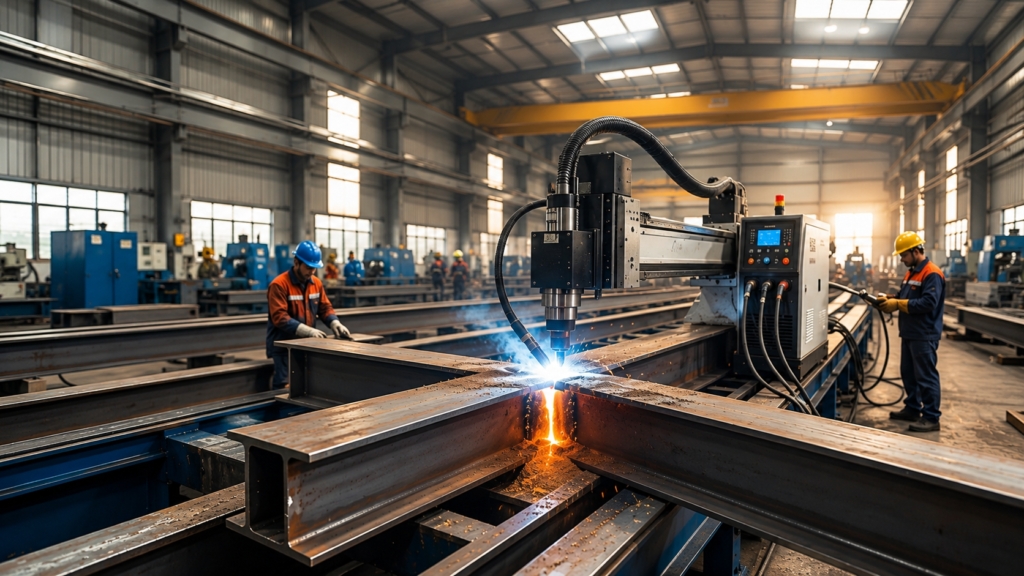
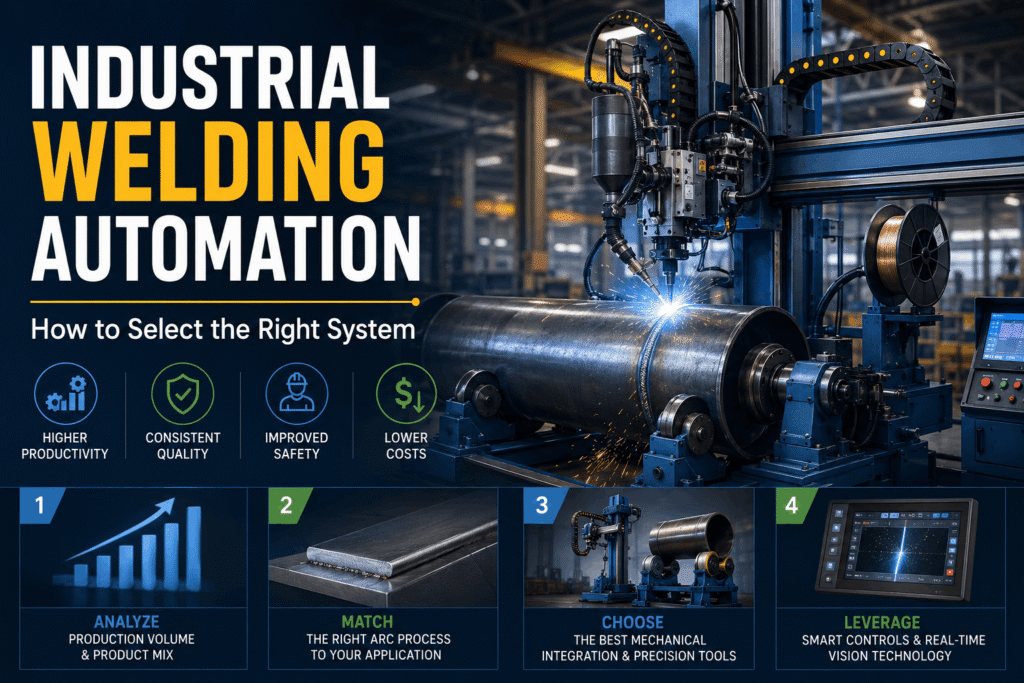
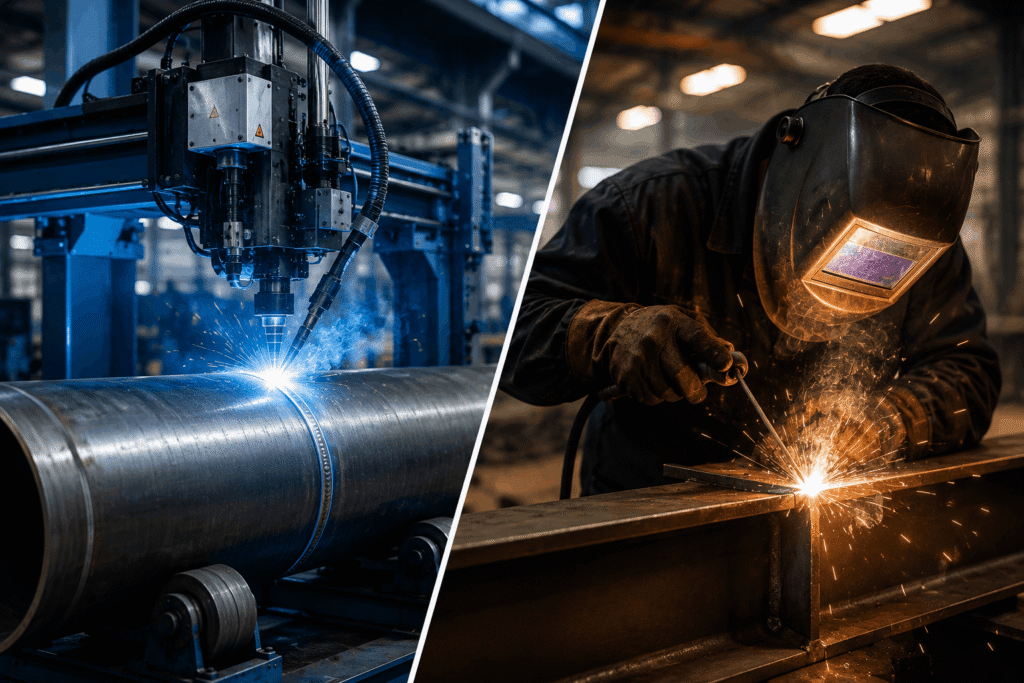
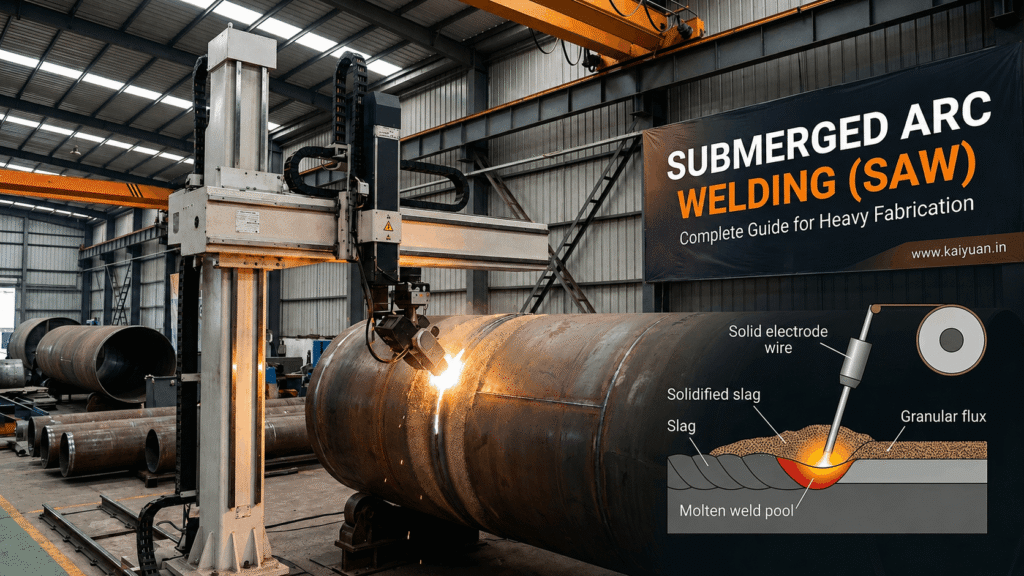
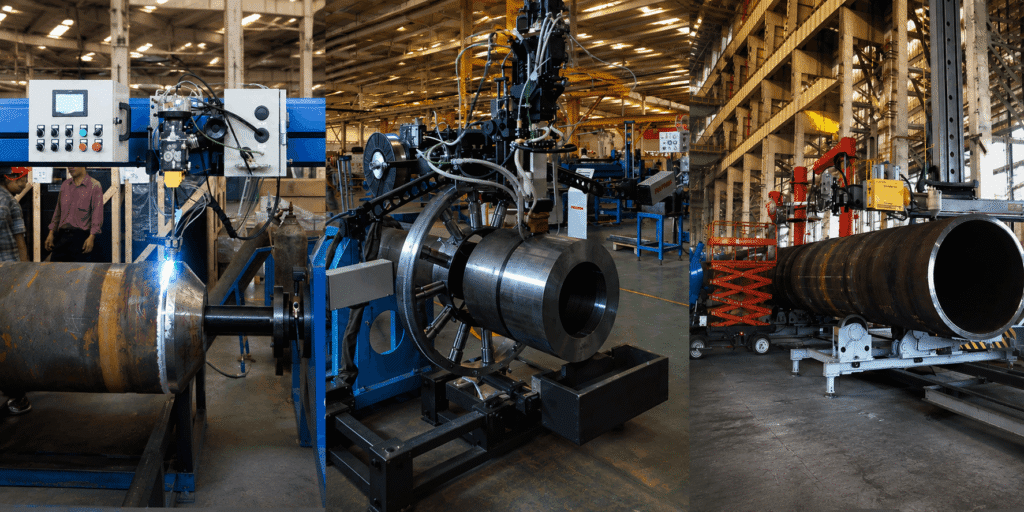
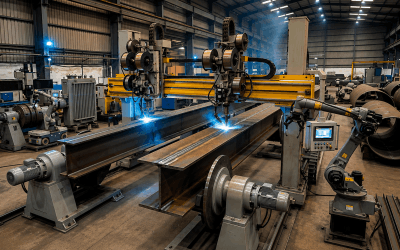
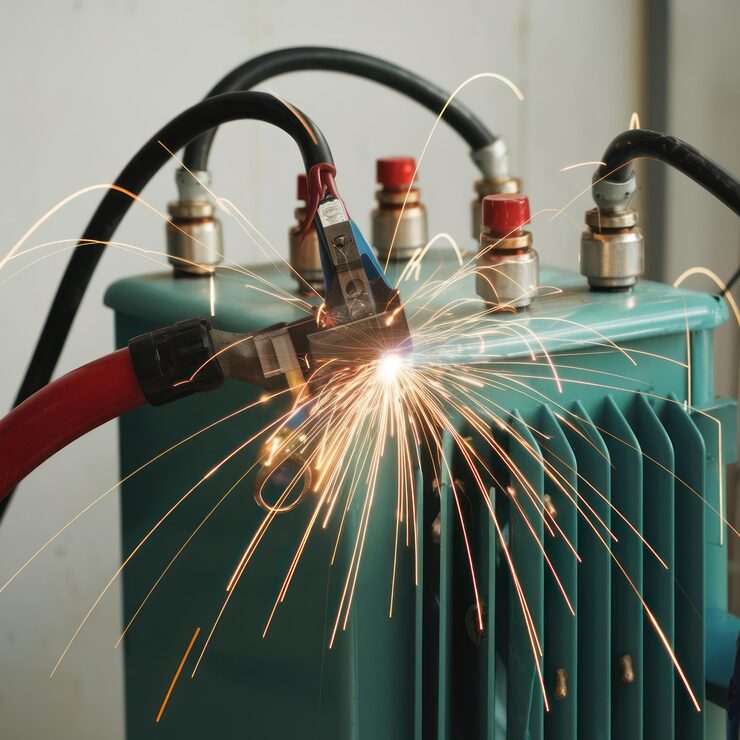
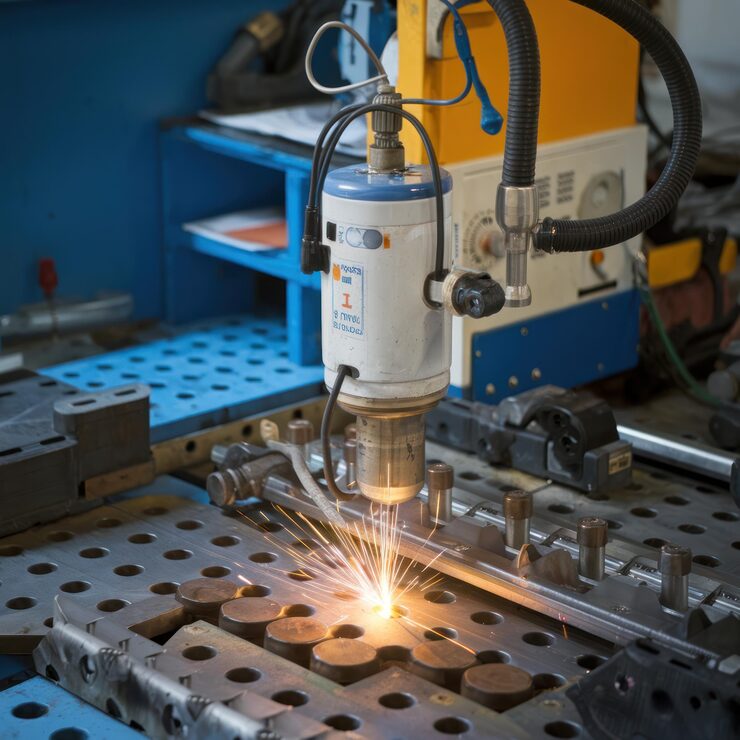
How to Choose the Right Industrial Welding Machine: A Complete Buyer’s Guide Selecting the proper equipment for heavy manufacturing operations is a decision that dictates long-term profitability, product quality, and operational safety. In the modern fabrication landscape, making an accurate industrial welding machine selection requires balancing multiple complex variables. A wrong equipment purchase can easily lead to structural joint failures, unexpected production bottlenecks, and costly operational downtime. Conversely, aligning your choice with your exact material specifications and volume targets can dramatically boost throughput and cut scrap rates. This comprehensive guide breaks down the essential factors needed to execute a flawless industrial welding machine selection. From decoding technical specifications to determining the right level of automation for your floor, we will outline the blueprint for a smart procurement strategy. Whether you are looking to upgrade a single station or fully overhaul an automated production assembly line, this resource is designed to help you make an informed decision. 1. Core Heavy-Duty Welding Processes and Equipment Types The foundation of sound industrial welding machine selection begins with identifying the most suitable welding methodology for your application. Each major process offers distinctive performance characteristics tailored to specific material types and structural demands. Submerged Arc Welding (SAW) Power Sources For thick structural steel fabrication, pressure vessels, and heavy infrastructure projects, Submerged Arc Welding remains the undisputed standard. SAW systems utilize a granular flux layer to blanket the molten weld pool, completely eliminating arc flash and hazardous smoke while delivering exceptionally deep penetration. Heavy Industrial TIG and MIG Welding Systems Gas Metal Arc Welding (MIG) and Gas Tungsten Arc Welding (TIG) are the backbones of modern precision fabrication. Advanced Multi-Process Systems and Specialized Technology Modern production challenges often require more than conventional equipment can provide. Advanced configurations combine multiple capabilities to optimize floor space and capital expenditures: 2. Analyzing Material Specifications and Structural Parameters Selecting an industrial system based solely on amperage ratings without examining metallurgical demands can lead to severe quality issues. Your material profile directly dictates the required power architecture of the machine. Material Type Recommended Welding Process Power Source Requirements Critical Selection Factor Heavy Mild/Structural Steel Submerged Arc Welding (SAW) / Heavy MIG High Amperage (600A-1200A+), High Duty Cycle Deep penetration, continuous thermal delivery Stainless Steel & Superalloys TIG / Narrow Gap TIG / Cladding Systems Precision Current Control, Low Amperage Stability Precise heat-input management, shielding gas integrity Aluminum Alloys Advanced MIG / Squarewave AC TIG AC Balance Control, High-Frequency Arc Start Oxide layer cleaning action, rapid heat dissipation Material Thickness and Thermal Input Management The thickness of your primary base metal determines the required current capacity and thermal threshold of your power source. Thin sheet metals require precision low-amperage control to prevent burn-through, while structural steel beams and thick-walled vessels demand consistent, high-amperage output to ensure complete joint fusion. For heavy-duty applications exceeding 20mm in thickness, standard manual methods quickly become inefficient. In these scenarios, sourcing machines designed for heavy multi-pass operations or automated strip cladding becomes essential to ensure uniform structural integrity. 3. Production Volume, Duty Cycle, and Power Distribution An industrial power source must withstand rigorous operating conditions without overheating or shutting down mid-weld. Evaluating duty cycle and plant power infrastructure is critical to avoiding premature component failure. The 100% Duty Cycle Benchmark In industrial manufacturing, duty cycles are measured over a 10-minute operation window. While light fabrication tools operate at a 40% or 60% duty cycle, high-volume industrial lines require power sources capable of operating at a 100% duty cycle at maximum amperage. This allows for continuous welding without thermal safety shut-offs, maximizing daily output. Industrial Electrical Infrastructure Compatibility Industrial facilities utilize three-phase electrical power (typically 380V, 415V, or 440V). It is essential to ensure that your chosen welding system features robust voltage fluctuation compensation. Fluctuations in the plant grid can alter arc characteristics, leading to porosity or lack of fusion. High-tier industrial units include active electronic stabilization to maintain arc consistency even during peak factory power demands. 4. Selecting the Optimal Automation Level for Your Shop Floor Transitioning from manual welding to automated systems is one of the most effective ways to lower production costs and solve skilled labor shortages. The right degree of automation depends heavily on your part volume and consistency. Semi-Automated vs. Fully Automated Systems Dedicated Special Purpose Machines (SPMs) When a factory produces identical components continuously, standard articulated robots can sometimes be less efficient than a custom Special Purpose Machine (SPM). For instance, dedicated conveyor roller manufacturing lines integrate pressing, cutting, and dual-torch welding into a single streamlined process. These specialized systems deliver far higher throughput and lower per-unit cycle times than general-purpose robotic arms. Integrating Material Handling and Positioning Equipment An automated power source is only as efficient as its positioning system. Integrating column-and-boom manipulators, heavy-duty welding rotators, and precise positioners ensures that the weld joint always remains in the optimal flat position. This integration minimizes defect rates and maximizes deposition speeds. 5. Industrial Application Profiles and Heavy Sector Requirements Different industries operate under distinct regulatory frameworks and structural standards. Your industrial welding machine selection must align with the specific compliance demands of your target market. Pressure Vessels, Boilers, and Heavy Chemical Reactors Fabricating equipment for high-pressure environments requires strict adherence to international codes like ASME Section VIII. Welds must pass 100% radiographic and ultrasonic non-destructive testing (NDT). To achieve this standard consistently, manufacturers rely heavily on automated Narrow Gap SAW and specialized corrosion-resistant cladding systems to avoid manual defects. Infrastructure, Pre-Engineered Buildings (PEBs), and Railway Girders The infrastructure sector requires long, uninterrupted structural fillet and groove welds. Equipment configurations for this space typically feature multi-arc tractor setups or dedicated gantry welding systems. These allow for rapid deposition across long steel girders while maintaining minimal distortion. Heavy Equipment Parts and Automotive Sub-Assemblies The high-speed nature of the automotive and heavy machinery sectors requires robust resistance welding systems. Utilizing high-capacity Single-Phase AC or Medium Frequency Direct Current (MFDC) spot and projection welders allows for rapid, high-strength joining of sheet metal and brackets without