
NARROW GAP SUBMERGED ARC WELDING
Advanced Narrow Gap Submerged Arc Welding Technology
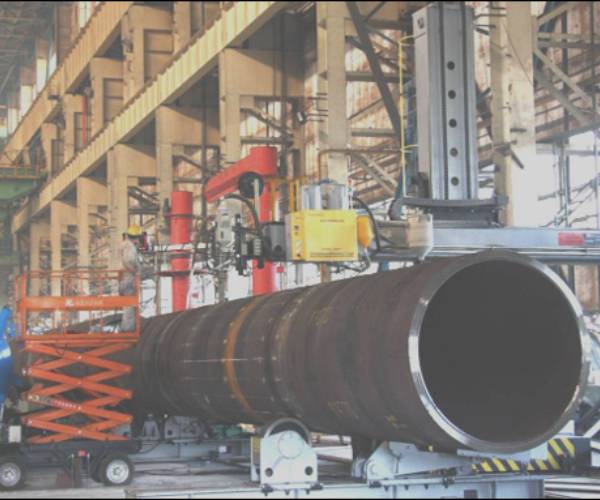
Narrow Gap Submerged Arc Welding (SAW) is a high-efficiency welding process specifically designed for joining thick materials using a reduced groove width. Unlike conventional submerged arc welding, which uses a wider groove, narrow gap SAW employs a nearly parallel or V-shaped groove with a small root opening, allowing deep penetration with fewer passes. This method minimizes filler metal usage, reduces welding time, and produces high-quality welds for heavy-duty applications.
The Narrow Gap SAW welding process offers excellent welding performance by improving deposition efficiency, reducing heat input, and maintaining superior weld strength. This advanced automated welding technology is widely used for thick plate fabrication where accuracy, consistency, and productivity are essential. The system helps manufacturers achieve precise weld joints with reduced distortion and improved overall fabrication quality.
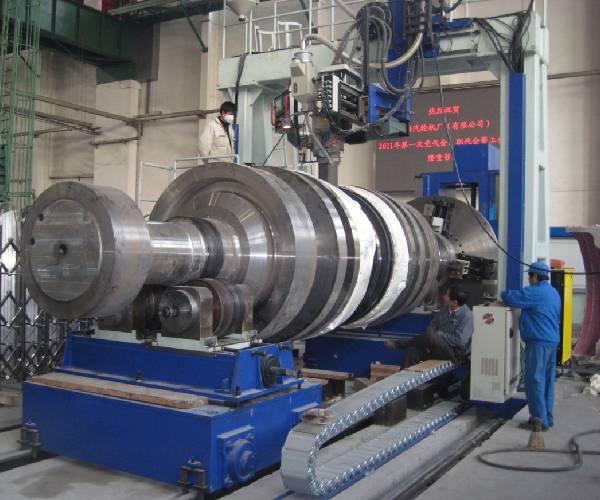
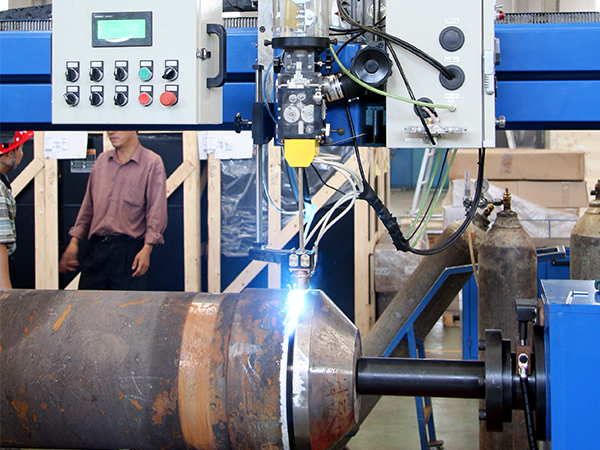
Kaiyuan’s Narrow Gap Submerged Arc Welding machine is engineered with advanced welding controls and reliable automation features to support industries such as pressure vessel manufacturing, heavy engineering, shipbuilding, railway fabrication, structural steel, and industrial manufacturing. With optimized welding parameters, high-speed welding capability, and efficient production output, NG-SAW solutions provide a cost-effective approach for large-scale welding applications.
Key Features of Narrow Gap Submerged Arc Welding Machine
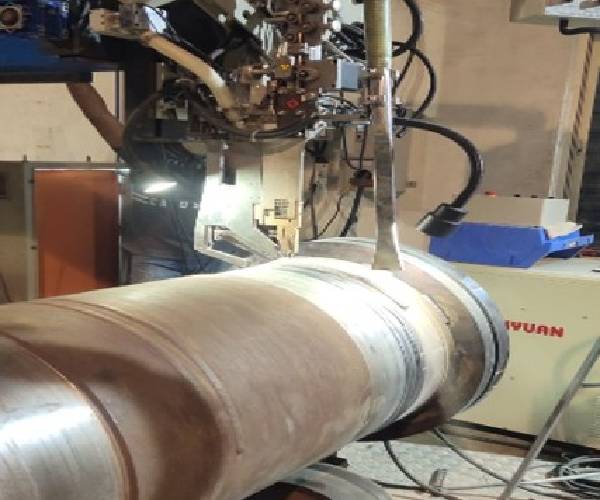
- Oscillating tip, left-mid-right three position welding position, oscillating assembly is stable and reliable.
- Chromium Zirconium Copper contact tip, alloy copper material torch soft connection with good conductive, those can increase life span.
- Torch body is made of stainless steel and plasma paint technology.
- Automatic flux feeding and recovery and sensors to sense sidewall variations.
- High Welding Efficiency – Enables faster welding of thick materials with fewer welding passes, improving overall production speed.
- Reduced Filler Metal Consumption – Narrow groove design minimizes weld volume, helping reduce consumable costs and material usage.
- Deep Weld Penetration – Provides strong and consistent penetration for heavy-duty fabrication applications.
Technical Specifications of Narrow Gap Submerged Arc Welding Machine
| Max. Weld Thickness | 400 mm |
|---|---|
| Groove Angle | 1° – 2° |
| Groove Width | 18 – 30 mm (18 – 22 mm at bottom) |
| Pass No. per Layer | Two passes (One pass at first layer) |
| Wire Diameter | 3.0 / 4.0 mm |
| Wire Feed Speed | 60 – 180 mm/min |
| Deposition Speed | 5 – 10 kg/h |
| Torch Oscillating Range | ≤ ±3.5° |
| Torch Oscillating Precision | ≤ ±0.5° |
| Horizontal Tracking Precision | ≤ ±0.2 mm |
| Vertical Tracking Precision | ≤ ±0.5 mm |
| Cross Slide Strokes | 300 × 400 mm |
| Highest Heated Temperature | 350℃ |
| Min. Diameter for Internal Welding | 1500 mm |
Related Products
INDUSTRY & APPLICATION

PEB & INFRASTRUCTURE
IDLER ROLLER MANUFACTURING

RAILWAY GIRDER

PRESSURE VESSELS

SHEET METAL & AUTOMOBILE

SHIP BUILDING
Frequently Asked Questions
What you should know
How is Narrow Gap SAW different from conventional Submerged Arc Welding?
Unlike conventional SAW that uses wide V-grooves, Narrow Gap SAW uses a nearly parallel joint design. This reduces weld volume, minimizes heat input, and significantly improves welding efficiency for thick sections.
What are the main advantages of Narrow Gap Submerged Arc Welding?
The key benefits include lower filler metal consumption, reduced welding time, minimal distortion, improved weld quality, and cost savings in heavy fabrication industries like pressure vessels and shipbuilding.
What thickness of material is suitable for Narrow Gap SAW?
Narrow Gap SAW is typically used for medium to very thick plates, generally above 50 mm and can be effectively applied for materials up to several hundred millimeters depending on equipment capability.
Which industries commonly use Narrow Gap Submerged Arc Welding?
It is widely used in industries such as shipbuilding, oil & gas, power plants, heavy structural fabrication, pressure vessels, and wind tower manufacturing.
Why is Narrow Gap SAW more cost-effective?
It reduces the weld groove volume, which directly lowers filler wire and flux consumption. It also shortens welding cycles and decreases energy usage, making it highly economical for large-scale fabrication projects.