
NARROW GAP TIG WELDING MACHINE
NARROW GAP TIG MACHINE FOR PRECISION FABRICATION
Narrow Gap TIG Welding (also known as Narrow Gap GTAW – Gas Tungsten Arc Welding) is a precision welding technique designed for joining thick materials with minimal groove width. Unlike conventional TIG welding, which uses a wider groove, narrow gap TIG welding employs a carefully prepared V-shaped or near-parallel groove with a small root opening. This enables deeper penetration, fewer passes, and precise control over heat input, making it ideal for critical applications where weld quality and material integrity are paramount.
This technique is particularly beneficial for materials that require minimal distortion and high structural reliability. By controlling heat input and limiting the groove size, narrow gap TIG welding minimizes residual stresses and preserves the mechanical properties of the base metal. The process produces clean, defect-free welds with superior root fusion, making it suitable for high-specification projects requiring precision welding, low heat input welding, and advanced welding automation.
Kaiyuan’s Narrow Gap TIG Welding solutions are designed to deliver consistent performance, improved productivity, and reliable weld quality for heavy fabrication industries. These automated systems support applications where accuracy and repeatability are essential. Explore our Welding Automation Solutions for advanced industrial welding equipment and customized automation systems.
Key Features of Narrow Gap TIG Welding Machine
- Unique electrode oscillation to guarantee side wall penetration and increase weld efficiency
- Superior Weld Quality – Produces clean, smooth, and defect-free welds with excellent fusion.
- Precision Welding Control – Provides accurate arc control and stable welding performance for high-quality weld joints.
- Low Heat Input Technology – Minimizes thermal distortion and helps maintain the mechanical properties of the base material.
- 3-directional AVC tracking, automatic operation.
- Advanced Welding Automation – Automated torch movement and parameter control ensure consistent welding results.
- Improved Productivity – Reduces welding time and enhances production efficiency compared to conventional TIG welding methods.
- Minimal Distortion & Residual Stress – Optimized welding process improves component strength and reliability.
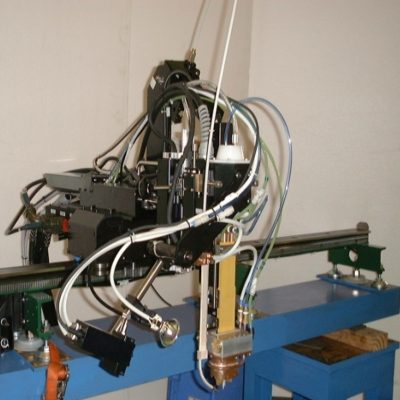
Technical Specifications of Narrow Gap TIG Welding Machine
| Max. Weld Thickness | 150 mm (Horizontal), 600 mm (Flat) |
|---|---|
| Groove Width | 9 – 10 mm |
| Deposition Speed | 35 – 60 g/min |
| Weld Speed | 50 – 300 mm/min |
| Pass No. per Layer | One pass |
| Wire Diameter | 1.2 mm |
| Wire Feed Speed | 0.2 – 6.8 m/min |
Related Products
INDUSTRY & APPLICATION

PEB & INFRASTRUCTURE
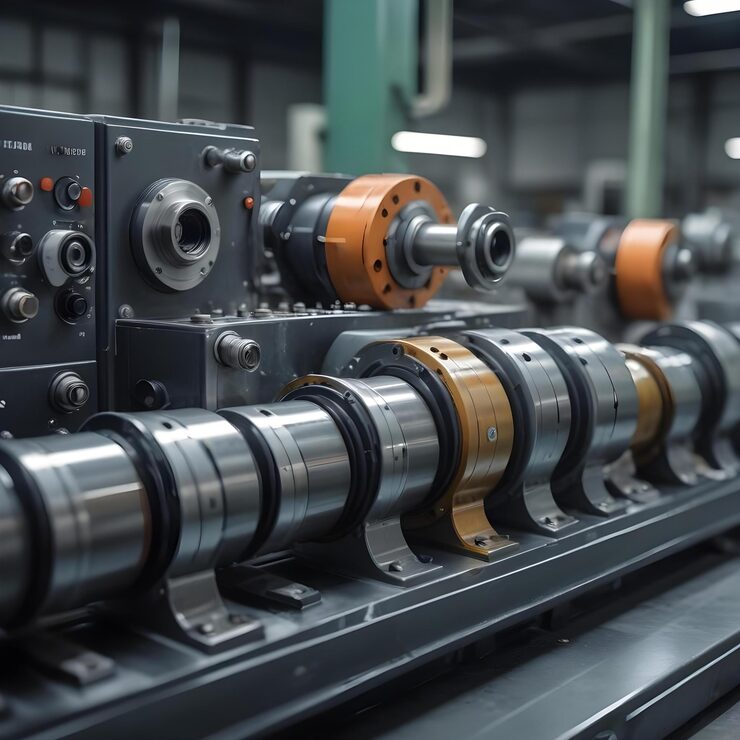
IDLER ROLLER MANUFACTURING

RAILWAY GIRDER
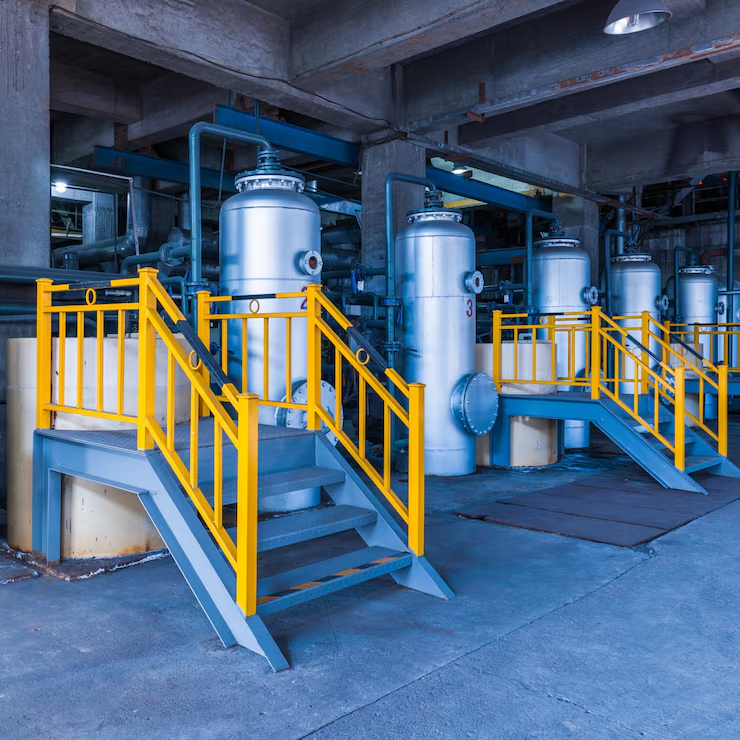
PRESSURE VESSELS

SHEET METAL & AUTOMOBILE

SHIP BUILDING
Frequently Asked Questions
What you should know
What is Narrow Gap TIG Welding?
Narrow Gap TIG Welding (GTAW) is an advanced welding process used to join thick materials using a very narrow groove. It reduces weld volume, improves penetration, and delivers high-quality, defect-free welds with minimal heat input.
What are the advantages of Narrow Gap TIG Welding?
This process offers multiple benefits such as reduced filler material consumption, lower heat distortion, faster welding speed, and improved weld strength. It is highly suitable for heavy fabrication industries requiring precision and reliability.
Where is Narrow Gap TIG Welding commonly used?
It is widely used in industries like pressure vessels, shipbuilding, railway manufacturing, heavy machinery, and structural fabrication. It is ideal for thick-section components that require strong and durable joints.
How does Narrow Gap TIG Welding improve efficiency?
By using a narrow groove design, the process significantly reduces the number of welding passes required. This leads to faster production cycles, lower energy consumption, and reduced operational costs.
What materials can be welded using Narrow Gap TIG Welding?
Narrow Gap TIG Welding is suitable for carbon steel, stainless steel, alloy steel, and other high-strength metals. It is especially effective for materials requiring precise heat control and minimal distortion.
What challenges are associated with Narrow Gap TIG Welding?
The process requires precise joint preparation and specialized equipment. Poor alignment or incorrect parameters can lead to sidewall fusion issues, so proper automation and skilled operation are essential for best results.