
NARROW GAP MIG WELDING
Advanced Narrow Gap MIG Welding Technology
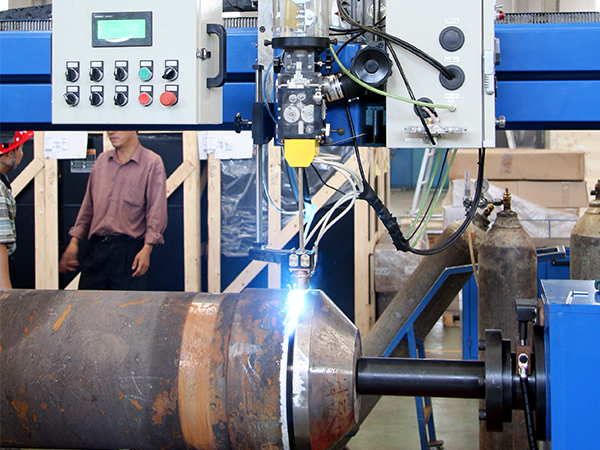
Narrow Gap MIG Welding is a specialized technique within the Metal Inert Gas (MIG) / Gas Metal Arc Welding (GMAW) process, designed for joining thick materials ranging from 12.5 mm to several hundred millimeters in thickness. Unlike conventional MIG welding, which uses a wider groove preparation, narrow gap welding utilizes a V-shaped or nearly parallel groove with a small root opening, enabling efficient welding with fewer passes. This advanced process reduces filler material consumption, minimizes welding time, and improves overall production efficiency.
This method is highly beneficial for applications where material savings, welding accuracy, and reduced distortion are essential. By controlling groove width and heat input, Narrow Gap MIG Welding helps minimize thermal deformation while maintaining the mechanical properties of the base material. The process provides excellent root penetration, stable arc performance, and strong defect-free weld joints even in heavy plate fabrication.
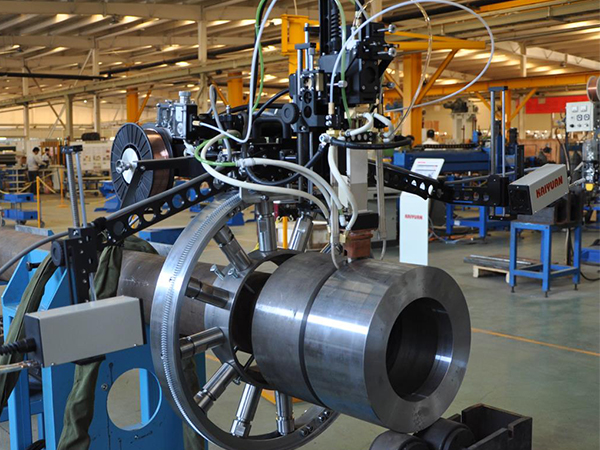
Kaiyuan’s Narrow Gap MIG Welding System is engineered with advanced welding automation technology, precision wire feeding, and controlled welding parameters to deliver consistent results for demanding industrial applications. For additional high-performance welding solutions, explore our Narrow Gap TIG Welding Solutions designed for precision welding requirements.
Key Features of Narrow Gap MIG Welding Machine
- Massive reducing welding duration.
- Low Heat Input Technology – Helps reduce thermal distortion and maintains the strength of base materials.
- Energy saving(wire, power and etc.).
- Reduced Filler Wire Consumption – Narrow groove design minimizes weld metal volume and reduces material usage.
- High Welding Efficiency – Enables faster welding of thick materials with fewer passes, improving overall production productivity.
- Advanced Welding Automation – Automated torch movement and parameter control ensure accurate and repeatable welding performance.
- Stable Arc Performance – Delivers smooth arc control for consistent weld quality and improved process stability.
- Cost-Effective Manufacturing Solution – Reduces welding time, minimizes waste, and improves production efficiency.
SPECIFICATION
| Max. Weld Thickness | 400 mm |
|---|---|
| Groove Width | 9 – 16 mm |
| Deposition Speed | 70 g/min, 90 g/min |
| Weld Speed | 100 – 300 mm/min |
| Pass No. per Layer | One pass |
| Wire Diameter | 1.2 / 1.6 mm |
| Wire Oscillating Frequency | 60 per min |
| Shield Gas | Ar 80% + CO₂ 20% |
Related Products
INDUSTRY & APPLICATION

PEB & INFRASTRUCTURE
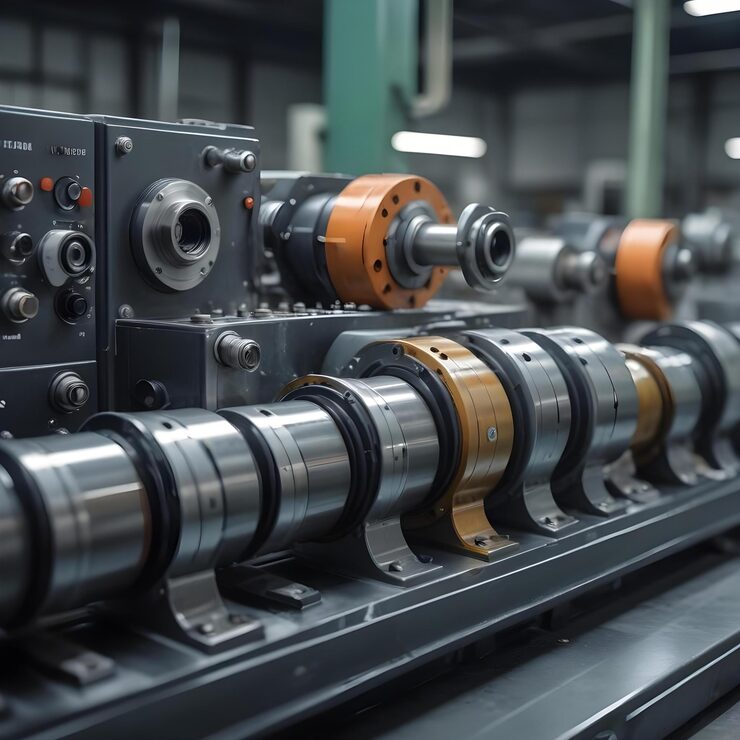
IDLER ROLLER MANUFACTURING

RAILWAY GIRDER
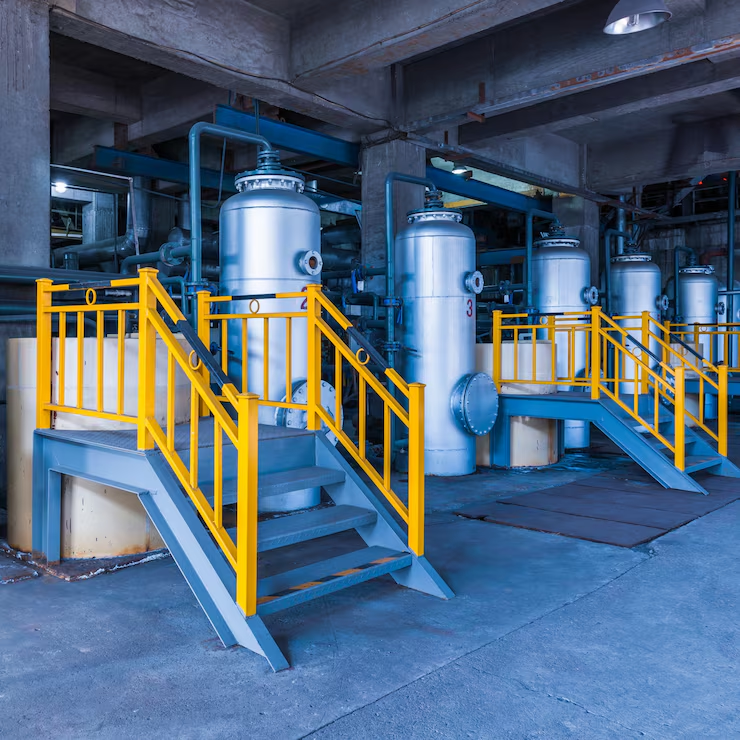
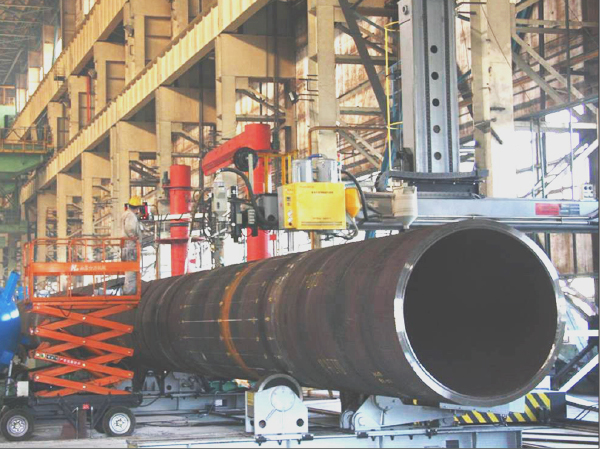
PRESSURE VESSELS

SHEET METAL & AUTOMOBILE

SHIP BUILDING
Frequently Asked Questions
What you should know
What is Narrow Gap MIG Welding?
Narrow Gap MIG Welding is an advanced GMAW process that uses a narrow groove design to weld thick materials with fewer passes and improved efficiency.
Where is Narrow Gap MIG Welding commonly used?
It is widely used in heavy industries such as pressure vessels, shipbuilding, railways, power plants, and structural fabrication where thick materials need strong and precise welding with minimal distortion.
What are the advantages of Narrow Gap MIG Welding?
The main advantages include reduced filler material consumption, faster welding time, lower heat input, minimal distortion, and improved weld quality for thick-section metals.
What are the benefits of Narrow Gap MIG Welding?
It reduces filler wire consumption, lowers heat input, improves productivity, and provides high-quality weld joints.
Why is Narrow Gap MIG Welding better for thick materials?
Because it uses a narrow groove, it reduces the amount of weld metal required while ensuring deep penetration and strong fusion, making it more economical and efficient for thick plates.
Does Narrow Gap MIG Welding require special equipment?
Yes, it requires specialized narrow-gap welding torches, mechanized systems, and precise joint preparation equipment to ensure proper access, alignment, and high-quality weld consistency.