
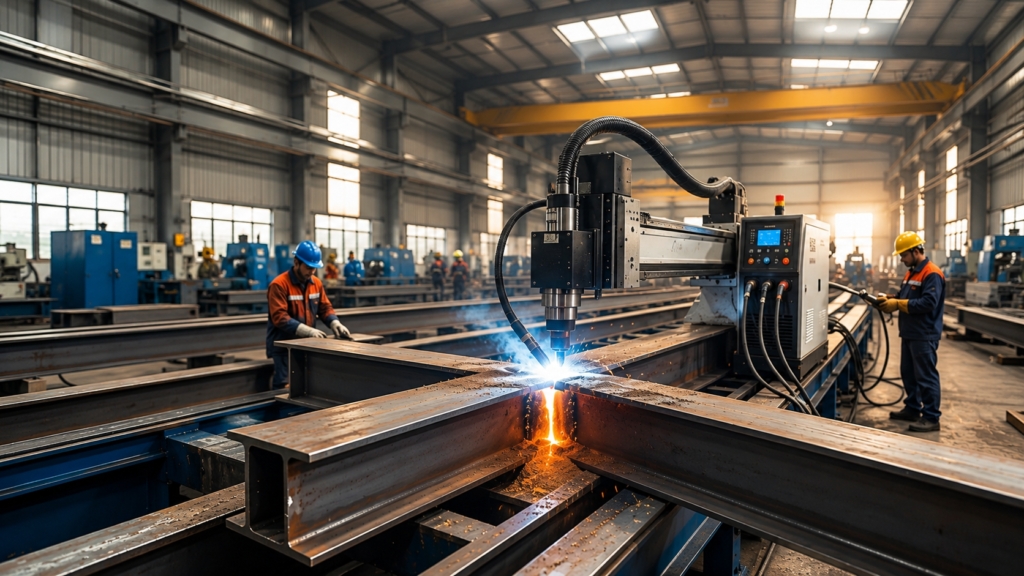
Best Submerged Arc Welding Machine Manufacturer in India: What to Look For
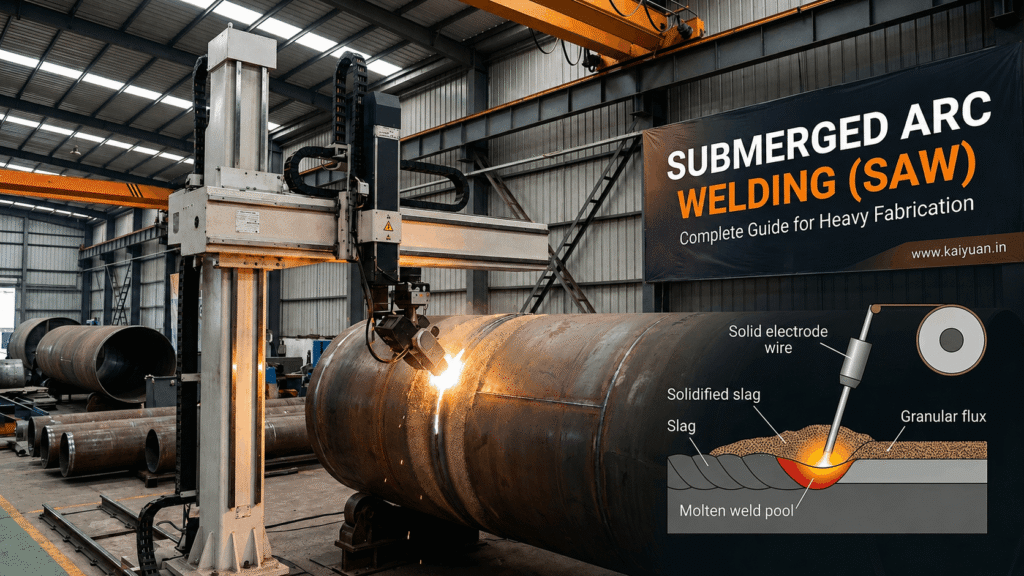
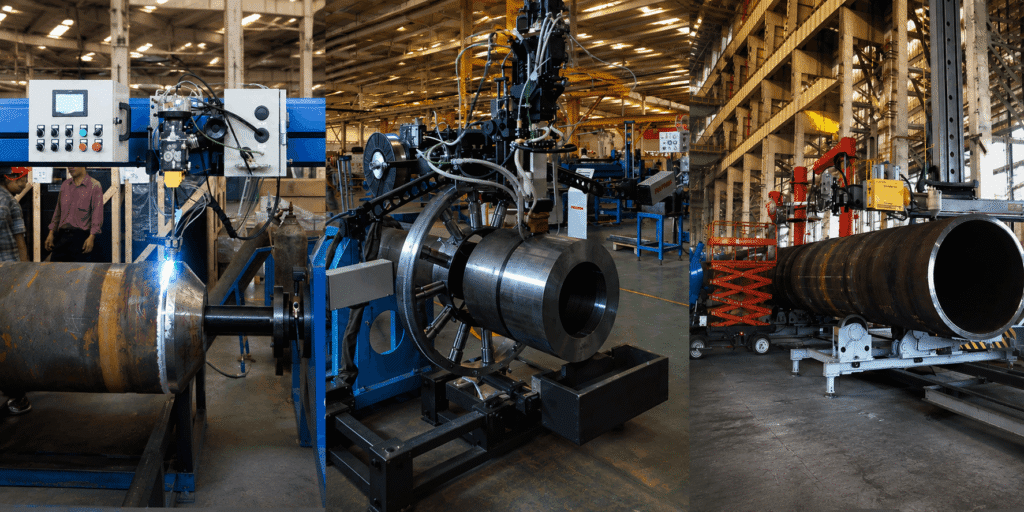
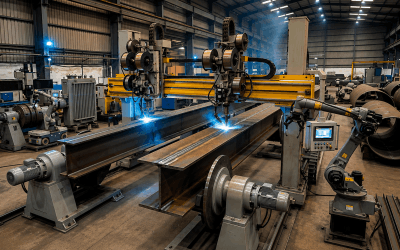
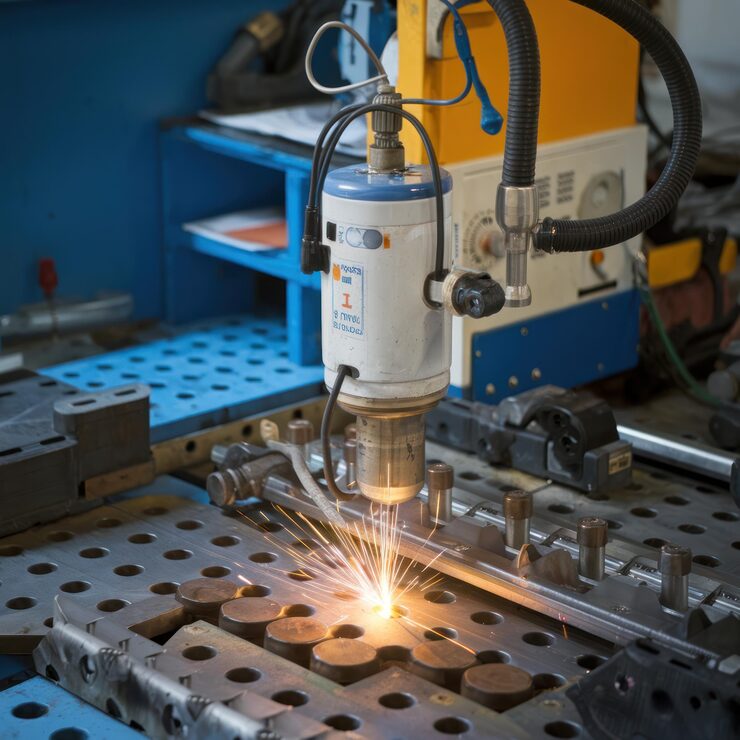
Best Submerged Arc Welding Machine Manufacturer in India: What to Look For In the rapidly expanding industrial landscape, heavy fabrication demands precision, speed, and uncompromising structural integrity. Whether you are building massive pressure vessels, constructing heavy-duty railway girders, or shaping Pre-Engineered Buildings (PEBs), your equipment choice dictates your bottom line. Consequently, finding the right Submerged Arc Welding Machine Manufacturer is one of the most critical decisions your engineering team will make. The Submerged Arc Welding (SAW) process relies on a granular flux blanket to shield the welding zone from atmospheric contamination. This method provides exceptionally deep penetration, minimal smoke, and clean, high-quality deposits. However, to unlock these advantages consistently, you need robust equipment backed by advanced technology. Selecting a reliable Submerged Arc Welding Machine Manufacturer in India goes far beyond looking at a simple price tag. It requires a deep dive into engineering standards, technological collaborations, and real-world application support. Let us break down exactly what you must look for when choosing your industrial fabrication partner. Why Choosing the Right Manufacturer Impacts Production Quality Heavy manufacturing leaves zero room for error. A single defect in a heavy-duty weld joint can delay timelines, skyrocket repair costs, or compromise structural safety. Therefore, your choice of heavy-duty welding equipment acts as the literal backbone of your workshop. 1. Advanced Technology Integration The industrial sector has transitioned away from legacy systems. Today, standard workshops require high-efficiency setups that reduce manual intervention. When evaluating an industrial provider, look closely at their technical heritage. For instance, manufacturers utilizing specialized design partnerships, such as the globally recognized Panasonic technology framework, consistently deliver exceptional reliability. This advanced integration translates directly into stable arc performance, minimal downtime, and uniform bead profiles across miles of heavy steel fabrication. 2. Industry-Specific Customization No two fabrication projects are exactly alike. A standard power source might suffice for simple structural steel, but complex pressure vessels require distinct wave-control configurations. A premier Submerged Arc Welding Machine Manufacturer should provide a wide array of specialized options, including: Core Criteria to Evaluate a Submerged Arc Welding Machine Manufacturer When sorting through potential equipment suppliers in India, you must look past basic marketing claims. Use these technical and structural indicators to evaluate true engineering competence. Engineering Footprint and Domestic Presence Is the supplier a mere distributor, or do they possess a fully realized manufacturing setup? A true 100% Indian company with specialized roots can understand local power grid fluctuations, operating environments, and regulatory standards. For example, a dedicated facility located in a manufacturing hub like Pune, Maharashtra, serves as an ideal indicator of structural permanence. Furthermore, a manufacturer with an active on-site demo center allows your technical teams to test advanced configurations before finalizing capital expenditures. Testing technologies like Narrow Gap SAW or advanced Strip Cladding Devices on your specific metal alloys removes all guesswork from the procurement loop. Comprehensive Product Portfolio A reputable heavy-duty welding equipment provider shouldn’t just sell power sources; they should deliver comprehensive automation workflows. If your operations grow, you will likely need to expand into adjacent automated systems. Choosing a partner who designs complementary technology ensures seamless long-term scaling. Ensure your chosen manufacturer offers a robust spectrum of industrial systems: Technical Features Your Submerged Arc Welding Systems Must Have Investing in heavy industrial machinery requires a checklist of non-negotiable technical features. If a manufacturer cannot offer these baseline capabilities, your production efficiency will inevitably lag. 1. Robust Duty Cycle and Thermal Rating For continuous industrial fabrication, a 100% duty cycle at maximum current output is mandatory. Your machines must run effortlessly through long shifts without overheating or triggering thermal shutdowns. High-grade thyristor-controlled systems or digital inverter modules must be housed in dust-resistant, well-ventilated enclosures designed specifically for heavy-duty metal workshops. 2. Seamless Integration with Welding Automation Solutions Manual SAW setups are increasingly rare. Modern factories rely on tractor units, welding booms, column-and-boom manipulators, and gantry systems. The power source you buy must feature flexible analog or digital communication interfaces to connect seamlessly with broader welding automation solutions. Without proper interface protocols, integrating the machine into a robotic cell or a heavy-duty automated girder line becomes an engineering nightmare. 3. Precision Wire Feeding Mechanisms The quality of a submerged arc weld relies heavily on consistent wire delivery. Fluctuations in wire speed lead to variations in bead width and penetration depth. Look for heavy-duty, four-roll drive wire feeders that prevent slippage even when pulling thick wire diameters from massive wire spools over extended distances. Maximizing Efficiency with Advanced Welding Processes A visionary Submerged Arc Welding Machine Manufacturer does not stop at standard open-arc setups. They continually innovate, driving efficiency through specialized processes designed for high-stress manufacturing sectors. Narrow Gap Submerged Arc Welding (SAW) When welding exceptionally thick plates—such as those used in nuclear reactors, massive pressure vessels, or heavy defense infrastructure—traditional V-groove preparations require an immense volume of filler metal. This takes countless passes and consumes massive amounts of time and raw materials. By upgrading to a specialized system like the Narrow Gap SAW, you can dramatically reduce the groove angle. This minimizes the total volume of weld metal required, slashes heating cycles, and drastically reduces overall fabrication time while maintaining immaculate radiographic quality. Automated Strip Cladding In the chemical, oil, and gas sectors, base metals must often be protected against corrosive substances. Instead of fabricating entire structures out of expensive corrosion-resistant alloys, engineers use a cost-effective alternative: overlaying a thick carbon steel plate with a protective layer using an automated Strip Cladding Device. A top-tier industrial manufacturer provides the precise power controls and specialized cladding heads required to deposit uniform, defect-free anti-corrosive linings efficiently. Industrial Applications: Who Relies on Premium SAW Equipment? To confirm that a manufacturer’s machinery can withstand your operational demands, look at the industries they actively serve. Heavy industrial environments require distinct performance characteristics that only specialized equipment can deliver. Post-Purchase Support: The True Mark of a Top Manufacturer The relationship with your Submerged Arc Welding Machine Manufacturer should never end when the equipment is delivered. In heavy manufacturing,