In high-voltage power transmission and heavy electrical manufacturing, thermal management determines equipment longevity. Transformers generate massive amounts of thermal energy during continuous operation. Without effective heat dissipation, internal insulation degrades rapidly, risking catastrophic power grid failures. Consequently, global power infrastructure projects demand high-grade cooling systems built with absolute precision.
To meet these strict standards, electrical equipment suppliers must invest in a modern, highly reliable transformer radiator production line. Choosing the right automated manufacturing setup directly impacts your factory’s operational efficiency, material yield, and long-term profitability.
This comprehensive guide breaks down everything heavy machinery manufacturers need to know when selecting, evaluating, and deploying an industrial transformer radiator production line.
The Critical Role of Radiator Production Lines in Power Engineering
A transformer radiator consists of parallel steel channels designed to circulate dielectric oil and dissipate internal heat. Manufacturing these assemblies requires intense precision. Even minor flaws in seam welding or channel forming can cause oil leaks or thermal bottlenecks.
Modern Kaiyuan Engineering Machinery systems integrate advanced automation to streamline panel forming, welding, header pipe assembly, and testing. Investing in automated cooling fin manufacturing offers distinct advantages:
- Consistent Thermal Performance: Uniform embossing ensures optimal fluid dynamics and reliable oil cooling performance.
- Zero-Leak Reliability: Robotic welding delivers air-tight seams capable of withstanding thermal expansion and high working pressures.
- High Throughput: Automated lines dramatically shorten cycle times compared to manual fabrication.
- Reduced Scrap Rates: Precision servo feed systems minimize coil waste during initial stamping and trimming.
Core Components of an Advanced Transformer Radiator Production Line
To evaluate suppliers effectively, you must understand the machinery that makes up a high-performance production line. A fully automated layout typically consists of six integrated stations:
1. Decoiling and Leveling Station
The process begins with cold-rolled steel coils (typically 1.0 mm to 1.2 mm thick). A heavy-duty hydraulic uncoiler feeds the metal sheet into a multi-roll leveling unit. This flattens the sheet and eliminates coil set, ensuring clean feeding into downstream dies.
2. Panel Stamping & Roll Forming Machine
Next, the sheet enters an automated fin press or high-precision roll forming machine. This machine presses oil channels into the metal and punches header holes simultaneously. Precision tooling ensures uniform channel depth across all transformer radiator fins, which is essential for consistent fluid circulation.
3. Spot and Seam Welding Equipment
After stamping, two mirrored panel halves are paired together. Advanced seam welding equipment binds the outer perimeter and spot welds the inner oil channels. Computer-controlled resistance welding produces uniform seam strength without scorching or warping the thin sheet metal.
4. End Trimming and Header Assembly
Once welded, the individual panels undergo automatic end trimming. They are then fitted onto a radiator header pipe. Automated manipulators position and weld multiple radiator fins transformer units onto the header pipe with exact spacing.
5. Automated Leak Testing Station
Quality control is critical in transformer manufacturing. Every completed panel assembly passes through an integrated leak testing station. The unit is pressurized with compressed air and submerged in water or tested via helium mass spectrometry to detect micro-porosity before coating.
6. Cleaning, Phosphating, and Painting
Finally, the assembly passes through an automated spray wash, phosphating line, and electro-coating (CED) or flow-painting booth. This ensures maximum corrosion resistance against harsh outdoors and offshore environments.
For a broader look at power distribution infrastructure standards, refer to the IEEE Power & Energy Society guidelines on transformer cooling specifications.
Key Factors to Consider When Selecting a Production Line
Selecting a transformer radiator production line is a long-term capital investment. To ensure a high return on investment (ROI), evaluate machinery based on these technical criteria:
1. Panel Size Flexibility and Range
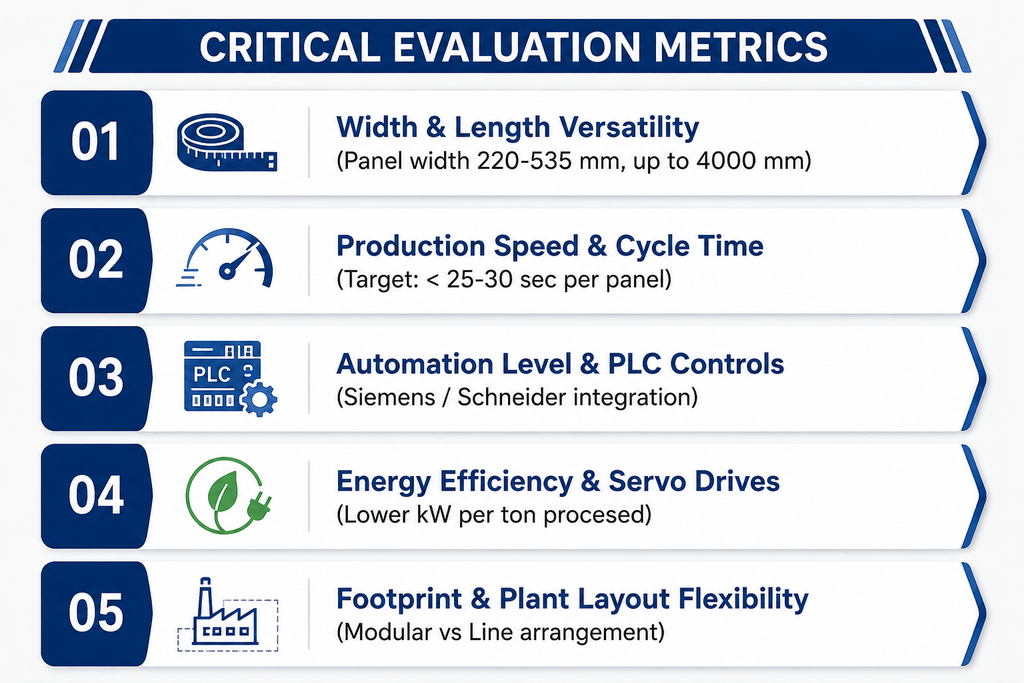
Transformer designs vary widely based on voltage class. Distribution transformers use compact panels, whereas power transformers require radiator lengths exceeding 3,000 mm. Ensure your production line accommodates variable panel widths (typically 220 mm to 535 mm) and adjustable lengths with minimal tooling changeover time.
2. Welding Technology and Speed
Welding quality directly dictates radiator lifespan. Look for mid-frequency inverter DC (MFDC) resistance seam welders. MFDC systems consume up to 30% less power than traditional AC welders while producing cleaner, stronger welds on transformer radiator fins.
3. Material Compatibility
High-end transformer radiator manufacturers work with both standard carbon steel (ST12/DC01) and stainless steel grades for coastal installations. Verify that the forming dies and punch presses handle varying material tensile strengths without excessive tool wear.
4. Integration with Transformer Tank Fabrication
A radiator line should integrate seamlessly into your broader factory workflow. Aligning radiator production with your overall transformer tank fabrication operation eliminates inventory bottlenecks and reduces material handling costs.
Comparing Manual, Semi-Automated, and Fully Automated Lines
Depending on your production volume and budget, you can choose between three machinery configurations:
| Feature / Capability | Manual Fabrication | Semi-Automated Line | Fully Automated CNC Line |
| Output Volume | Low (< 50 panels/day) | Medium (300–600 panels/day) | High (1,200+ panels/day) |
| Labor Requirement | High (8–12 workers) | Moderate (3–5 operators) | Minimal (1–2 supervisors) |
| Changeover Time | Slow (2–4 hours) | Moderate (30–60 mins) | Fast (< 15 mins via PLC) |
| Quality Consistency | Variable | High | Ultra-High (Zero defect target) |
| Capital Investment | Low | Moderate | High (Fastest long-term ROI) |
For large-scale heavy electrical plants, fully automated lines yield the lowest cost per radiator panel by slashing labor expenses and reducing material scrap rates below 1.5%.
To understand global efficiency standards for industrial motors and transformer manufacturing equipment, consult the International Electrotechnical Commission (IEC).
Common Challenges and Solutions in Radiator Manufacturing
| Challenge | Cause | Machine Feature Solution |
| Oil Leaks at Seam Edge | Inconsistent welding current or improper panel alignment | Servo-driven seam welders with automatic current tracking |
| Panel Distortion / Warping | Excessive thermal input during resistance welding | Inverter MFDC welding power sources with water-cooled electrodes |
| Paint Peeling / Corrosion | Poor surface preparation or trapped oil residue | Integrated inline ultrasonic cleaning and phosphating chambers |
| Frequent Line Stoppages | Improper coil feeding or burrs on cut edges | Precision hydraulic leveller with dual-edge trimming knives |
Why Choose Kaiyuan Engineering Machinery?
As a leading supplier of heavy industrial equipment, Kaiyuan Engineering Machinery designs and builds world-class, customized manufacturing solutions for power equipment fabricators worldwide.
Custom Engineering & Turnkey Setup
We don’t offer generic, one-size-fits-all machinery. Kaiyuan customizes every transformer radiator production line to match your exact floor layout, target output, and material specifications.
Complete Heavy Electrical Equipment Portfolio
In addition to radiator lines, we provide turnkey manufacturing solutions, including:
- High-speed roll forming machine systems.
- Corrugated tank production machinery.
- Core cutting and stacking lines.
- Complete transformer tank fabrication lines.
Our engineering team provides end-to-end support—from initial plant layout design and installation to operator training and maintenance support.
Upgrade Your Electrical Manufacturing Capabilities Today
Ready to boost your factory’s output, lower scrap rates, and produce defect-free radiator panels? Partner with an industry leader in heavy electrical machinery.
Contact Kaiyuan Engineering Machinery Today to consult with our lead engineers, request detailed technical specifications, or get a custom quote for your tailored transformer radiator production line.
Frequently Asked Questions (Q&A)
Q1: What material is typically used in a transformer radiator production line?
Cold-rolled steel sheets (DC01, ST12, or equivalent) with thicknesses ranging from 1.0 mm to 1.2 mm are standard. Stainless steel (304/316L) is also used for units installed in highly corrosive offshore or coastal environments.
Q2: How long does it take to change tooling for different panel sizes?
Modern automated lines with CNC PLC controls allow operators to adjust panel length instantly from the HMI screen. Width adjustments or complete die changes on an automated fin press typically take between 15 to 30 minutes.
Q3: What is the average lifespan of a high-quality radiator production line?
With routine maintenance, scheduled electrode replacements, and proper hydraulic fluid management, an industrial-grade line from a reputable manufacturer lasts 15 to 20+ years under continuous multi-shift operation.
Q4: Why is MFDC welding preferred over standard AC welding for radiator fins?
Mid-frequency direct current (MFDC) welding provides faster rise times, stable heat input, and reduced power consumption. This prevents burn-through on thin metal sheets and ensures a leak-proof structural bond across all transformer radiator fins.
Q5: Can a single line produce both distribution and power transformer radiators?
Yes. Variable-width and variable-length production lines accommodate smaller distribution panels as well as multi-meter power transformer radiators on the same line with quick-change tooling.